
Yarn & tools
Guide to Mohair Yarn: What It Is and How to Knit With It
Mohair is a fluffy, lightweight fiber from the angora goat, usually spun around a silk or synthetic core and held together with another yarn. It adds warmth, softness and a soft halo without weight. It is harder to rip out than smooth yarn, so count as you go and it will treat you well.
By the Knit&Note team
That soft cloud of a sweater you keep seeing? Almost certainly mohair. It is the fiber behind the fuzzy halo that makes a knit look warm before you even touch it.
Here is what mohair actually is, when to use it, and the honest truth about working with it.
What mohair is
Mohair comes from the angora goat (not the angora rabbit, which gives angora fiber; the names are a historical accident). The fiber is long, silky and strong, and takes dye beautifully, which is why mohair yarns come in such saturated colors.
Most mohair you will knit with is lace weight: a thin thread of mohair spun around a core, often silk. On its own it looks like almost nothing. Knitted up, the fibers bloom into a halo that fills the fabric with air.
Why patterns hold mohair together with another yarn
Look at the patterns below and you will see a theme: mohair is usually knitted together with a strand of something else, merino, alpaca or wool. The companion yarn gives structure and stitch definition, the mohair adds warmth, softness and glow. Two thin strands also knit up faster than one thick one, because the needle size goes up.
You will also meet patterns knitted in two or three strands of mohair alone, like our Halo Sweater. More strands, more cloud.
What mohair is like to knit
Lovely, with one warning.
It is warm without weight. A mohair sweater can weigh half of what the same sweater in pure wool weighs.
It forgives uneven knitting. The halo hides small sins.
It does not forgive ripping out. The fibers cling to each other, so frogging mohair is slow, fiddly work. Count your stitches when the pattern gives you a number, and catch mistakes while they are one row old.
If you find mohair itchy against bare skin, look for mohair with a silk core and wear a layer under, or hold it with merino.
Three patterns that show what mohair can do
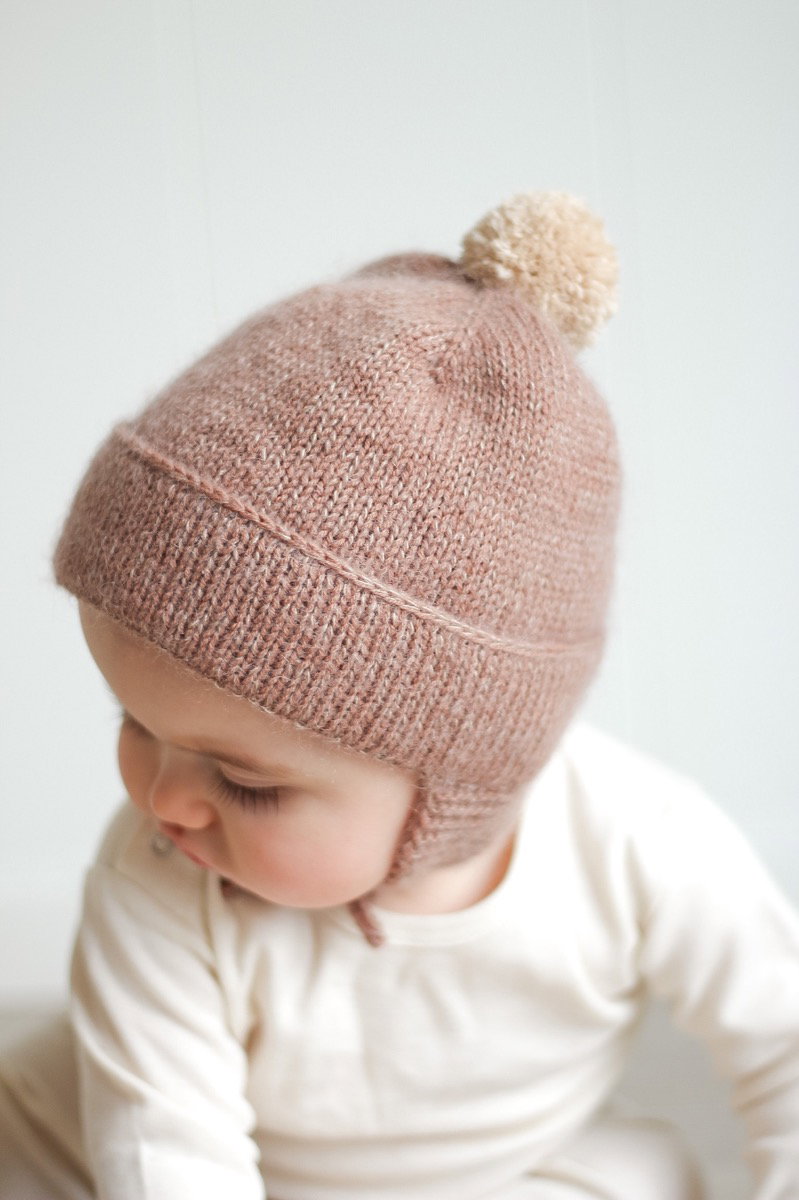
Autumn Beanie Mohair, by Jord Clothing. Jord Clothing Woolly Light held with Dale Kid Silk Erle, knitted top down in stockinette on 3 mm needles. A small project that teaches you how mohair behaves before you commit to a sweater.
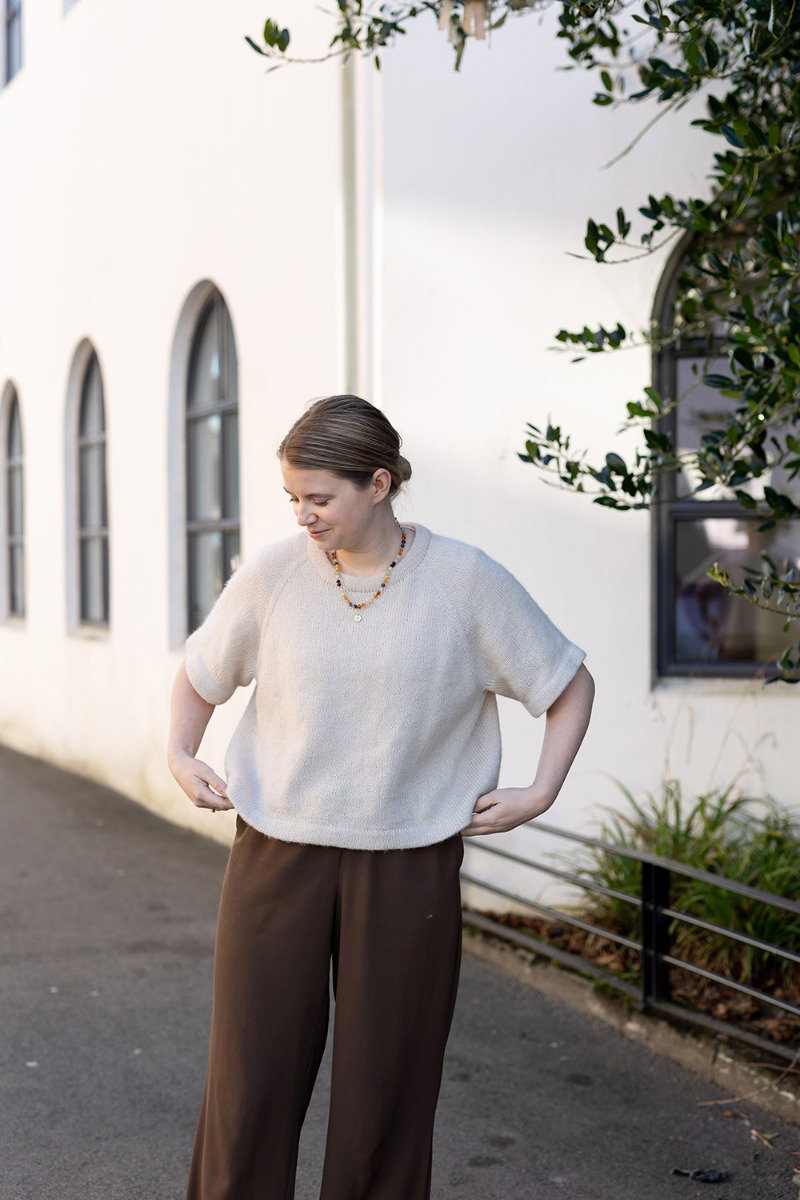
Bliss Tee Mohair, by Knit&Note. One strand of Knit&Note Merino and one of Cashmere Mohair, knitted top down. The classic mohair-plus-merino pairing in a tee you can wear most of the year.
Bliss Cardi Mohair, by Knit&Note. Two strands of Cashmere Mohair on 3 and 4 mm needles, with a faux button band. Pure mohair softness, and a clever construction that looks like a cardigan and knits like a tee.

FAQ
Is mohair itchy?
Less than its reputation. Good mohair with a silk core feels soft to most people. If you are sensitive, hold it with merino or wear it over a tee.
Can beginners knit with mohair?
Yes, with a small project first. A beanie teaches you the feel of it. Save the ripping-out risk of a full sweater for when your stitch count habit is solid.
What is the difference between mohair and alpaca?
Both give a halo. Mohair has more shine and bounce and holds its shape; alpaca is denser, drapier and warmer for its thickness. Many knitters love both, for different garments.
Can I substitute mohair in a pattern?
Within mohair yarns, usually yes, if the gauge matches. Replacing mohair with a smooth yarn changes the whole character of the garment, so swatch first and expect a different fabric.
