
Get started
How to Start Knitting: A Calm Guide for Complete Beginners
To start knitting you need exactly two things: a pair of needles around 5 mm (US 8) and one ball of medium or chunky wool yarn. Learn to cast on, knit, and bind off, in that order, and your first rows will become a headband or scarf you actually wear. Everything else, patterns, counters and help with the words, lives in the Knit&Note app.
By the Knit&Note team
Knitting looks complicated from the outside. From the inside it is two sticks, one string, and the same small movement repeated until it becomes a sweater. You do not need talent to start. You need one evening and a little patience with your own hands.
Here is the whole path, in order.
Buy two things, not ten
Walk past the kits and the accessory walls. For your first weeks you need:
Needles around 5 mm (US 8). Wood or bamboo if you can choose, because stitches cling to them instead of sliding off. Straight or circular both work; circular needles do everything straight ones do, so if you only buy one pair, make it a circular.
One ball of medium or chunky yarn in wool. Wool is elastic and forgiving, and a thicker yarn makes every stitch easy to see. Pick a light color your eyes like, because you will be staring at it, and dark yarn hides your stitches.
That is the kit. Scissors you already own, and a blunt darning needle for the very end costs almost nothing. Everything else can wait until a pattern asks for it.
Learn three movements
All of knitting rests on three things, and they are learned in a weekend:
Cast on. This puts the first row of loops on your needle. The long-tail cast on is the one most knitters use forever; it feels like a magic trick for the first ten minutes and then like nothing at all.
The knit stitch. In through the loop, yarn around, out with a new loop. This single movement, repeated, makes fabric. Rows of only knit stitches make garter stitch, the bumpy, squishy fabric every knitter starts with.
Bind off. This closes the loops so your work cannot unravel. Knit two, lift the first over the second, repeat. Done.
The purl stitch comes next, but it is not a day one skill. Garter stitch scarves and headbands do not need it.
Your first rows will be tight, uneven and a little strange looking. That is not a sign you are doing it wrong. That is what first rows look like, for everyone, and they even out faster than you expect.
Knit something real, immediately
Practice squares teach your hands, but they end up in a drawer. A small real project teaches your hands the same things and ends up on your head. These three, in this order, take you from first cast on to real confidence:
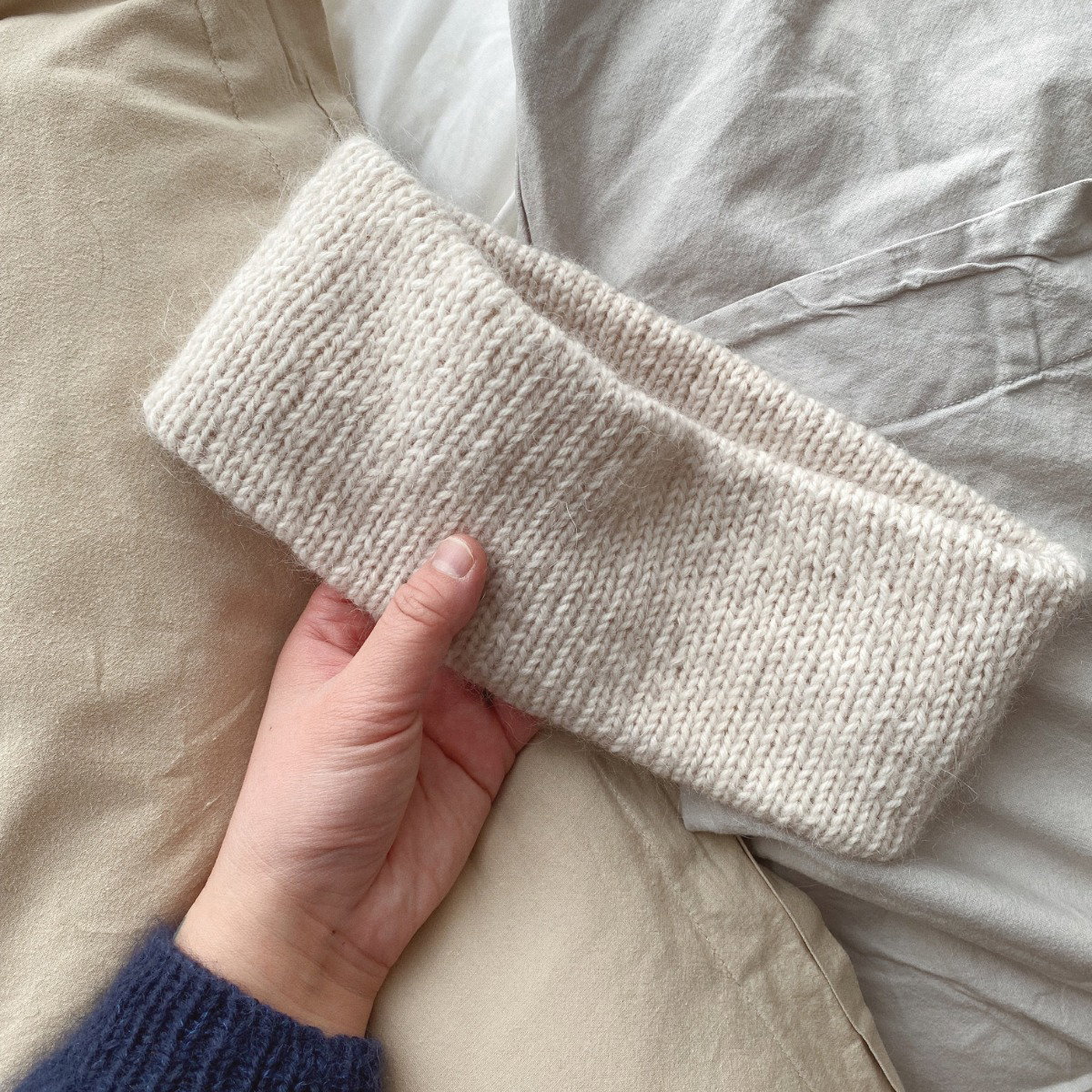
Joo Headband, by novemberknits. A minimalistic headband where you learn to cast on, knit, purl and bind off, which is most of knitting right there.
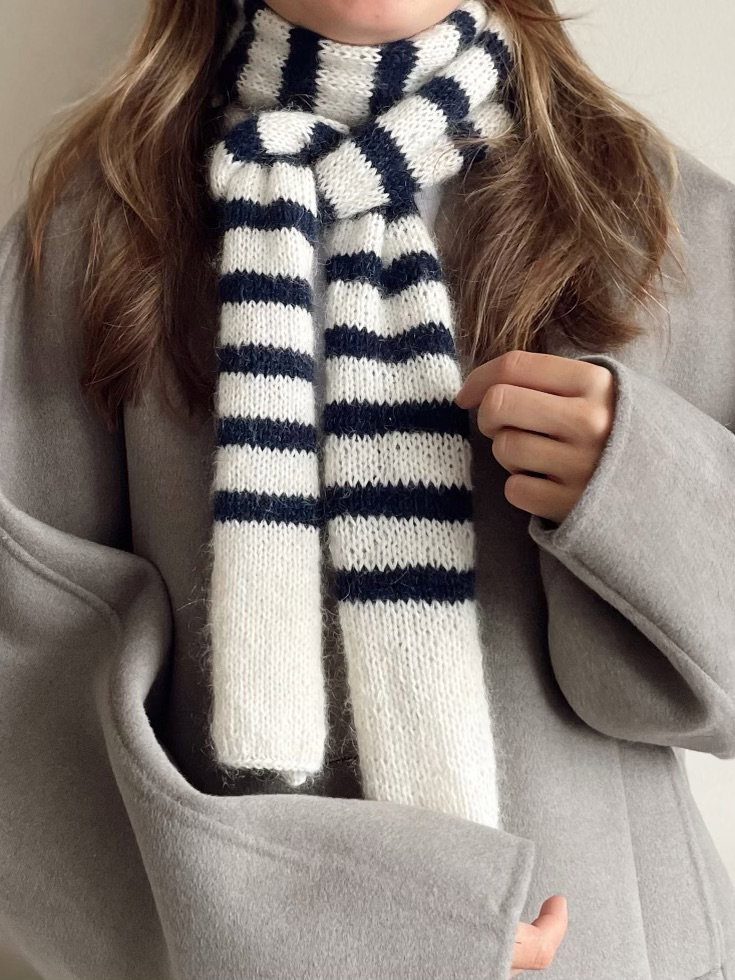
ScandiScarf, by Jord Clothing. Long, calm rows that turn the knit stitch into muscle memory. This is the project where knitting starts to feel like rest instead of effort.
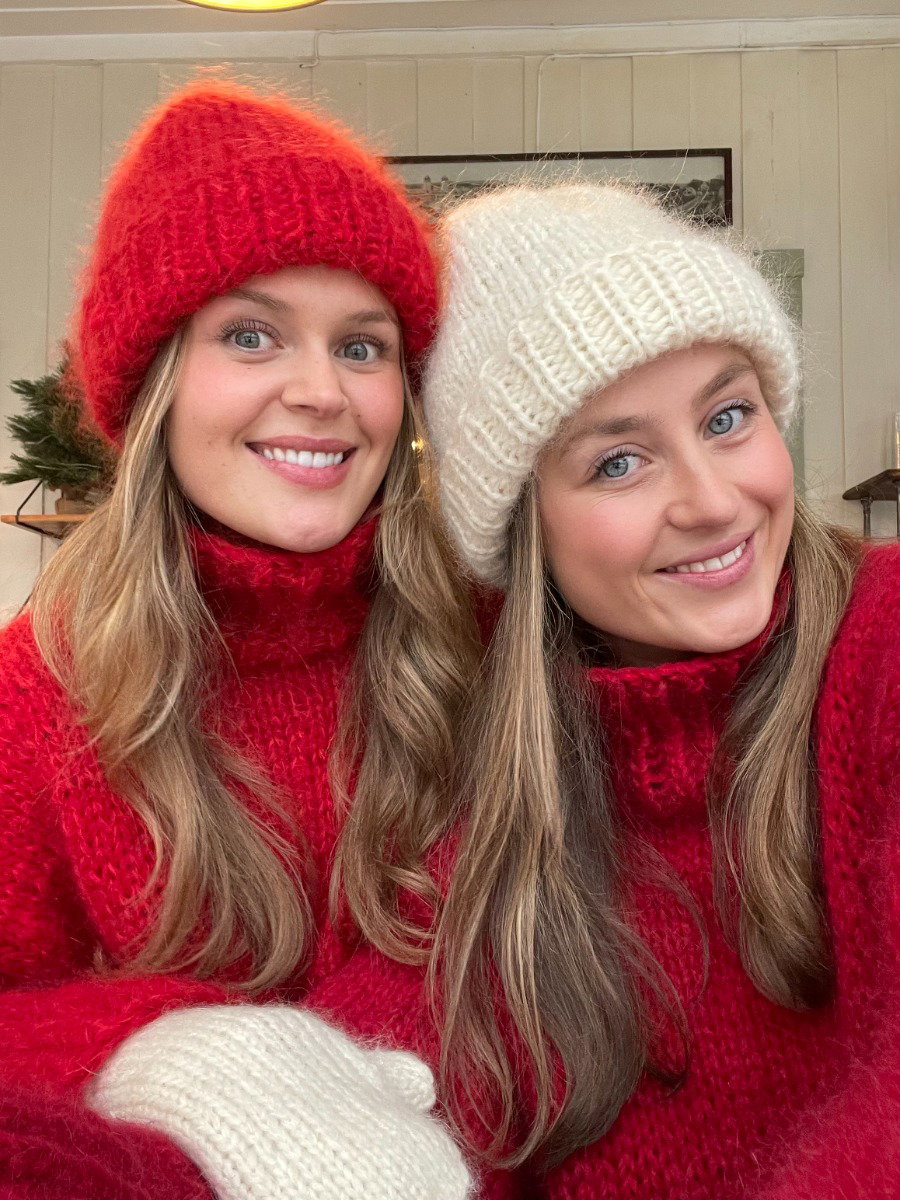
Spice Beanie, by Jord Clothing. Your first project in the round, which sounds advanced and is actually just knitting in a circle without ever turning around.
In the Knit&Note app
All three live in the Knit&Note app. The reader walks you through the pattern row by row, the counter keeps track so you do not have to, and every abbreviation is tappable, so "k2tog" explains itself the moment you meet it. When you put the project down for a week, the app remembers exactly where you stopped.
What to expect from the first month
The first evening is clumsy. The second one is better. Somewhere in the first week your hands stop asking for instructions, and knitting becomes the thing you do while the rest of you unwinds. Most beginners finish a headband in a weekend and a scarf within a few weeks of relaxed evenings.
You will drop a stitch at some point. It is the most normal mistake in knitting and it is completely fixable; nothing is ruined, and nothing needs to be started over.
FAQ
Is knitting hard to learn?
No, but it is awkward for the first few hours, the way riding a bike was. There are only three movements to learn before your first project, and none of them require strength or speed.
How long does it take to learn to knit?
One evening to make your first stitches, about a week of short sessions for the movements to feel natural, and a weekend or two for your first finished headband.
Should I learn with thick or thin yarn?
Thick. A chunky yarn on 5 mm or bigger needles shows you exactly what every stitch is doing, and projects grow fast enough to keep you motivated.
Can I teach myself to knit?
Yes. Most knitters today are self-taught with a pattern, a video or an app at their side. A pattern written for beginners, with help one tap away, does the job of a patient teacher.
What should I knit first?
A headband or a garter stitch scarf. Flat, small, made of only knit stitches, and genuinely wearable when you are done.

