
Get started
What You Need to Start Knitting (It Is Less Than You Think)
A beginner needs one pair of needles around 5 mm (US 8), preferably wood or bamboo, one ball of medium or chunky wool yarn, scissors and a blunt darning needle. Skip the kits, the gadgets and the stitch markers until a pattern asks for them. The pattern, the counter and the explanations can all live on your phone.
By the Knit&Note team
Yarn shops are wonderful and overwhelming in equal measure. Walls of yarn, drawers of needles, gadgets with names you have never heard. Here is the honest shopping list, and the even longer list of things you do not need yet.
The needles
One pair, around 5 mm (US 8). This size matches the yarn below, sits comfortably in most hands, and makes stitches big enough to see clearly.
Material matters more than beginners expect. Wood or bamboo needles have a slight grip, so stitches stay put while your hands are still learning. Metal needles are faster and lovely later, but slippery on day one.
Straight or circular? Circular needles, the ones joined by a cable, can knit everything straight needles can and also work in the round, so they are the better single purchase. But if the straight ones charm you, they are not wrong, just less flexible down the road.
The yarn
One ball of medium (worsted) or chunky yarn, in wool, with a recommended needle size on the label that matches your needles, so around 5 mm.
Why wool: it stretches and bounces back, which quietly forgives uneven tension. Cotton does not stretch, and fuzzy yarns like mohair hide your stitches exactly when you need to see them. Save both for later; mohair in particular is worth the wait, and we have a whole guide on it when you are ready.
Choose a light, solid color. Dark yarn swallows stitch definition, and busy multicolor yarn makes it hard to spot mistakes. Beyond that, pick the ball you keep coming back to. You are going to spend hours with it.
The two small extras
Scissors. Any scissors.
A blunt darning needle, for weaving in the yarn ends when you finish. Costs about as much as a coffee.
That is the complete kit. Everything fits in one small bag.
What you do not need yet
Stitch markers, row counters as gadgets, cable needles, blocking mats, pompom makers, swifts, winders. All of these have their day, and that day is not this month. Buy them when a pattern asks, not before. The starter kits sold as "everything you need" mostly contain things you will not touch in your first year.
In the Knit&Note app
The biggest thing on old supply lists was paper: the pattern, the notepad, the tally marks. The Knit&Note app replaces that layer entirely. The pattern lives in the reader, the row counter is built in, your notes stay attached to the project, and every abbreviation explains itself when you tap it. Your phone was already in your pocket.
Ready to cast on
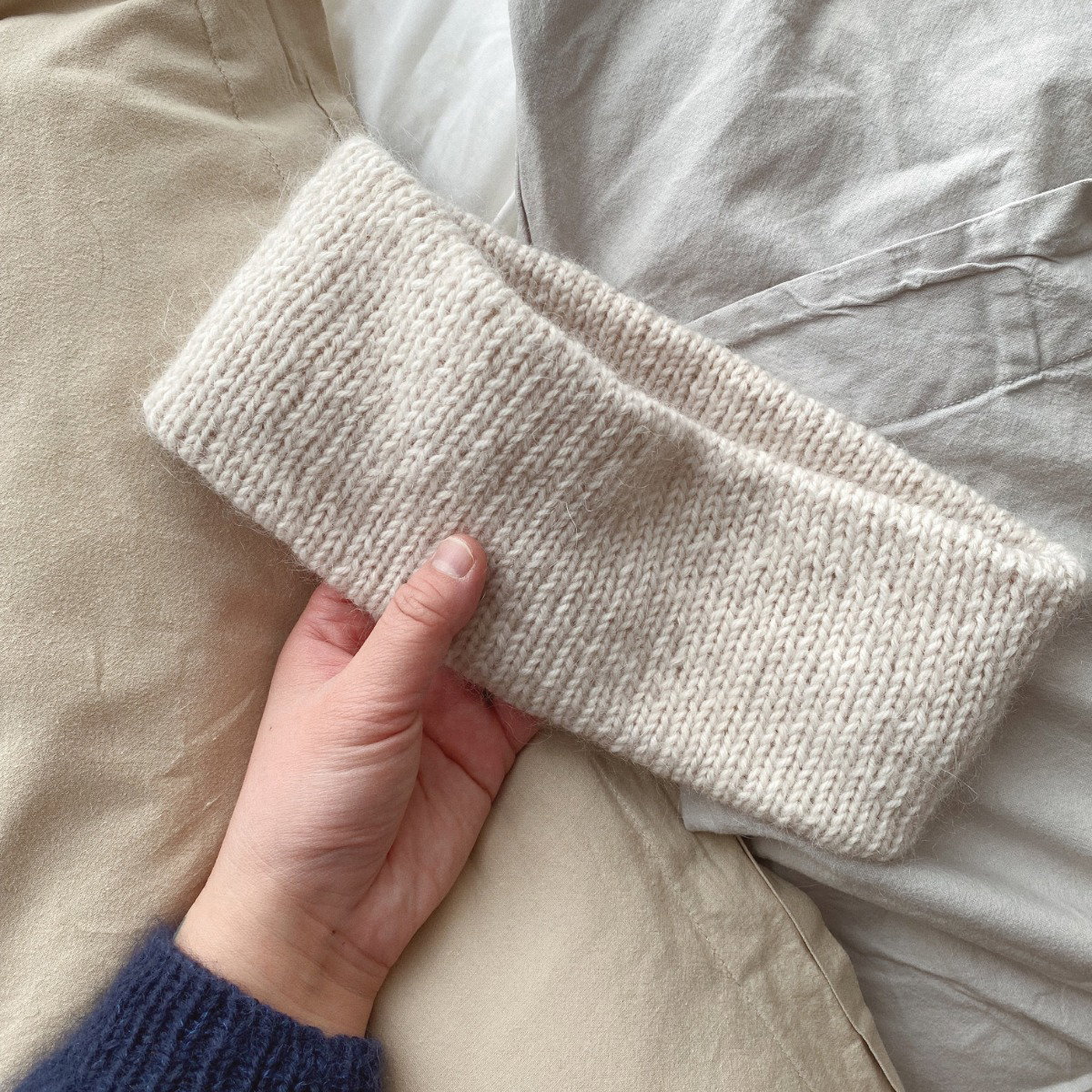
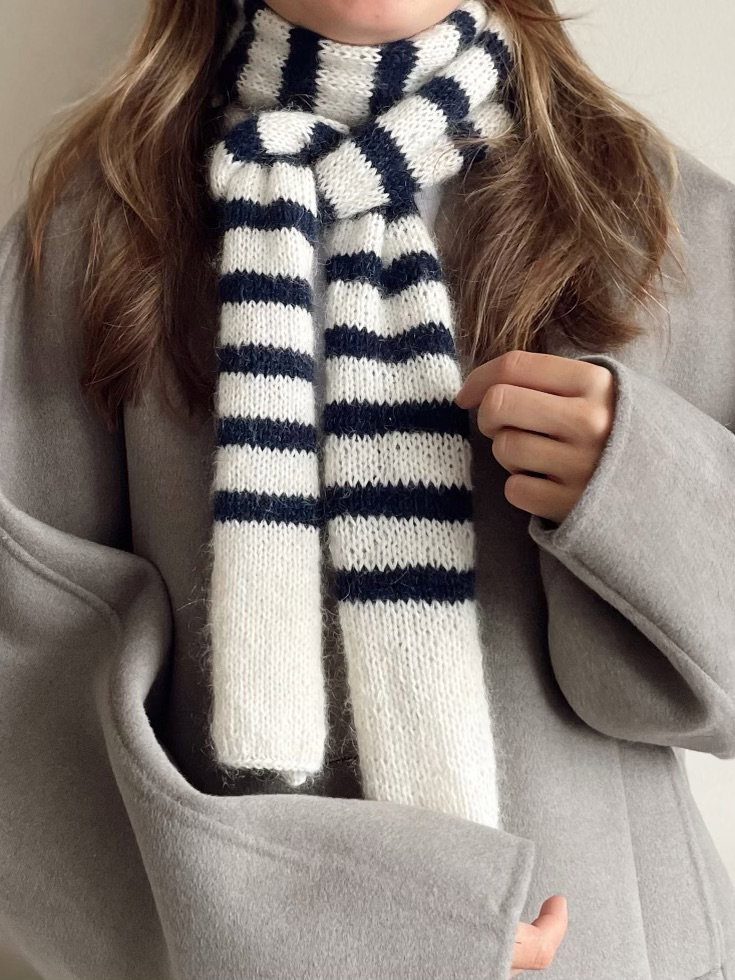
With needles and yarn in hand, the next step is three small movements and a first project you will actually wear. Our guide to starting out walks you through it, and these two patterns are built for exactly this moment:
Joo Headband, by novemberknits, where the basics become a finished thing in a weekend.
ScandiScarf, by Jord Clothing, the calm, classic first scarf.
FAQ
How much does it cost to start knitting?
A pair of good needles and a ball of decent wool together cost about as much as a takeaway dinner. Knitting gets expensive only if you fall in love with yarn, which, fair warning, happens.
What size needles are best for beginners?
Around 5 mm (US 8). Big enough that stitches are easy to see and count, small enough to suit the medium and chunky yarns beginners learn fastest with.
What is the easiest yarn to knit with?
A smooth, light-colored wool in medium or chunky weight. Elastic, visible, and forgiving of uneven tension.
Do I need a knitting kit?
No. Kits bundle convenience with filler. The two-item list above, chosen yourself, costs less and fits your hands and taste better.


